
The Nigerian Universities Ranking Advisory Committee (NURAC) has applauded the Nigerian university system for its improved showing in the 2026 Times Higher Education (THE) World University Rankings by Subject, released on January 21.
In a historic milestone, 24 Nigerian universities featured in the rankings, positioning Nigeria as the most represented country in Sub-Saharan Africa.
The assessment spans 11 subject areas, including Arts and Humanities, Business and Economics, Computer Science, Education Studies, Engineering, Law, Life Sciences, Medical and Health, Physical Sciences, Psychology, and Social Sciences.
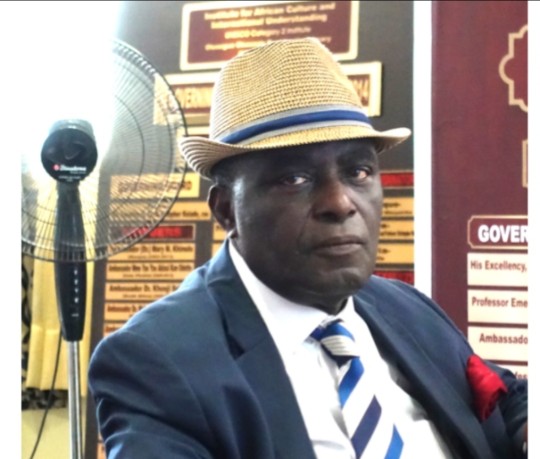
Commenting on the outcome, Chairman of NURAC and former Executive Secretary of the National Universities Commission (NUC), Professor Emeritus Peter Okebukola, described the performance as clear evidence of Nigeria’s growing academic strength and resilience.
He noted that Nigerian universities are increasingly gaining entry into highly competitive global categories across multiple disciplines.
In a statement issued to journalists in Abuja on Thursday, Okebukola attributed the achievement partly to recent policy interventions, particularly the improved welfare package for university staff and planned enhancements to teaching, learning, and research environments under President Bola Ahmed Tinubu’s administration.
He added that the progress also builds on reforms initiated by previous administrations, highlighting the contributions of former NUC Executive Secretary, Professor Abubakar Adamu Rasheed.
According to NURAC, inclusion in the 2026 subject rankings required institutions to meet strict benchmarks, including minimum research publication volumes over the past five years, such as 500 papers for Engineering and 100 for Law, as well as defined staff strength thresholds in each subject area.
The statement revealed that Nigerian universities made notable gains in professional programmes.
The University of Ibadan and the University of Nigeria, Nsukka, ranked within the 301–400 band globally for Law. In Medical and Health Sciences, the University of Ibadan retained its position in the 301–400 category, with the University of Lagos placed in the 401–500 band. Several other institutions, including Ahmadu Bello University, Bayero University Kano, University of Benin, University of Jos, and University of Nigeria, Nsukka, were ranked between the 601–800 band.
Okebukola further disclosed that Nigerian institutions demonstrated strong performance in science and technology-related disciplines. Landmark University led Nigerian universities in Computer Science within the 501–600 band, while Covenant University and the University of Ilorin featured in the 601–800 range. In Physical Sciences, institutions such as the Federal University of Technology, Minna; Landmark University; and the University of Ilorin secured places in the 601–800 band.
Social Sciences also remained a key area of strength, with Covenant University and the University of Ibadan ranked in the 501–600 category. The University of Nigeria, Nsukka, stood out as Nigeria’s sole representative in Psychology, placed in the 501–600 band globally.
In Arts and Humanities, the University of Ibadan and the University of Nigeria, Nsukka, led Nigerian entries in the 601–800 bracket, while in Business and Economics, Covenant University, the Federal University of Technology Akure, Obafemi Awolowo University, and the University of Ilorin were all ranked within the same range.
Engineering rankings saw Covenant University, LAUTECH, Landmark University, and the University of Ilorin featured in the 801–1,000 band.
Okebukola emphasised that the THE subject rankings are based on one of the most rigorous evaluation systems globally, using 18 performance indicators grouped under Teaching, Research Environment, Research Quality, International Outlook, and Industry Income. He noted that the weighting of these indicators varies by discipline to ensure fairness and relevance.
“The figures clearly show that Nigerian universities are no longer on the fringes of global academia,” Okebukola said. “They are actively competing and influencing scholarship worldwide.
While this progress is commendable, sustained effort is required to maintain and improve these gains.”
He reaffirmed NURAC’s commitment to working closely with the NUC to consolidate the upward trend, commending all participating institutions for their inclusion in the rankings, regardless of band placement.
NURAC, a strategic advisory body focused on improving the global visibility and ranking performance of Nigerian universities, identified key areas for further growth.
These include increased investment in research infrastructure and grants, stronger international collaborations, enhanced university-industry partnerships, and adequate funding support for the implementation of its 2022–2030 strategic plan.
The committee comprises distinguished academics and former vice-chancellors representing Nigeria’s six geopolitical zones, under the chairmanship of Professor Emeritus Peter A. Okebukola.